 Book Printing in China
 Custom Card Decks
 Custom Holographic Cards
 Free Wall Calendar Template
 Free Desk Calendar Template
 Folding Cartons
 Rigid Boxes
 Corrugated Boxes
 Custom Board Game
 Custom Card Game
 Kickstarter Print Solutions

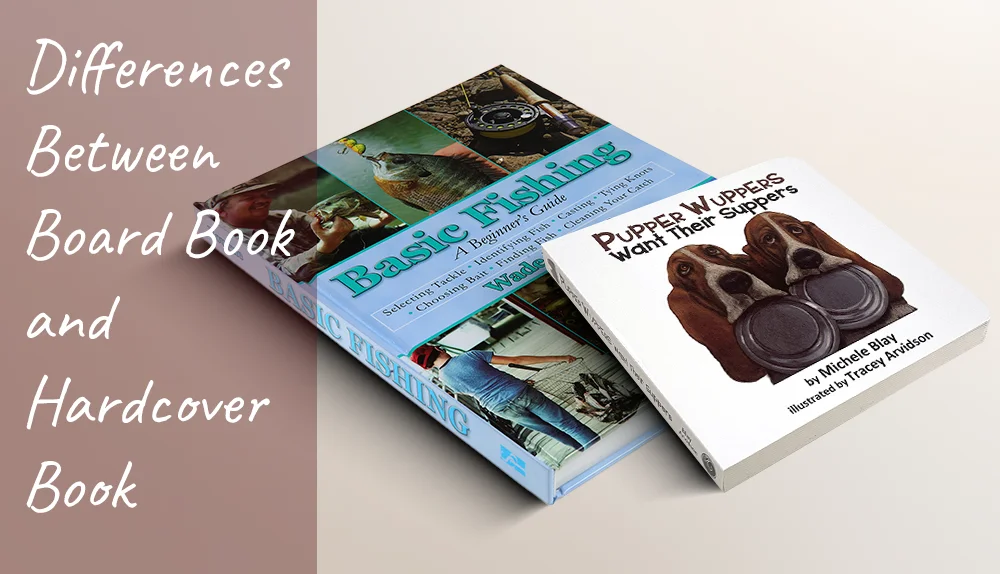
If you’re planning to print a children’s book, photo book, or premium edition, you’ve likely run into the term “board book” — and possibly noticed that it seems to mean two slightly different things depending on where you look. That’s because it does.
There are actually three distinct formats in this space, and understanding the difference upfront will save you time, money, and the frustration of ordering the wrong thing.
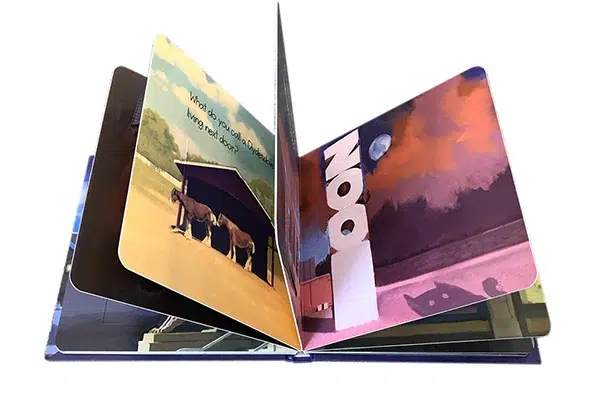
Thick paperboard cover + thick paperboard pages. Lay-flat 180°. Best for toddlers.
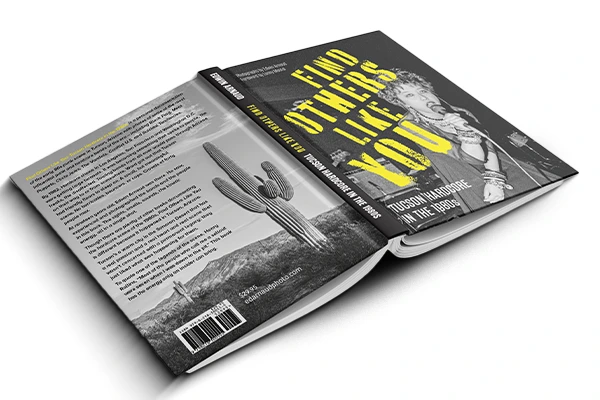
Hard gray-board case + thick paperboard pages. Lay-flat 180°. Best for premium children’s or photo books.
Hard gray-board case + standard paper pages. Best for novels, art books, reference titles.
Throughout this article we use these three names consistently:
- Standard Board Book — thick paperboard cover and pages, no gray board, lay-flat 180°
- Hardcover Board Book — hard gray-board case on the outside, thick paperboard pages inside, lay-flat 180°
- Hardcover Book — hard gray-board case on the outside, standard paper pages inside
The rest of this guide covers how each is built, what it costs, what finishing options are available, and exactly when to choose each one.
All Three Formats at a Glance
Use this table for a quick side-by-side decision. Detailed explanations follow below.
| Feature | Standard Board Book | Hardcover Board Book | Hardcover Book |
|---|---|---|---|
| Cover material | Thick paperboard (same as pages) | Gray board wrapped in printed paper, cloth, or leather | Gray board wrapped in printed paper, cloth, or leather |
| Inside pages | Thick paperboard (300 gsm+), double-layered | Thick paperboard (210 gsm+), double-layered | Standard book paper (80–157 gsm) |
| Opens flat (180°) | Yes — fully lay-flat | Yes — fully lay-flat | Partial — curves toward spine |
| Page count range | 8–64 pages | 8–80 pages | 24–800+ pages |
| Durability for toddlers | Excellent — resists tearing, chewing, moisture | Excellent — same board pages, harder cover | Not suitable — paper pages tear easily |
| Premium finishes (cloth, leather, foil, dust jacket) | Limited — cover lamination, foil, rounded corners only | Full range — cloth, leather, dust jacket, foil, ribbon, painted edges | Full range — all hardcover finishes available |
| Typical use cases | Children's picture books, baby books, touch-and-feel books | Premium children's books, panoramic photo albums, keepsake editions | Novels, art books, coffee table books, reference titles |
| Price vs. same-spec hardcover book | 20–45% more expensive per copy | 30–55% more expensive per copy | — (baseline) |
| Min. order qty (MOQ) | 100 copies | 100 copies | 100 copies |
| Typical lead time | 15–18 business days | 15–20 business days | 10–15 business days |
How Each Format Is Built
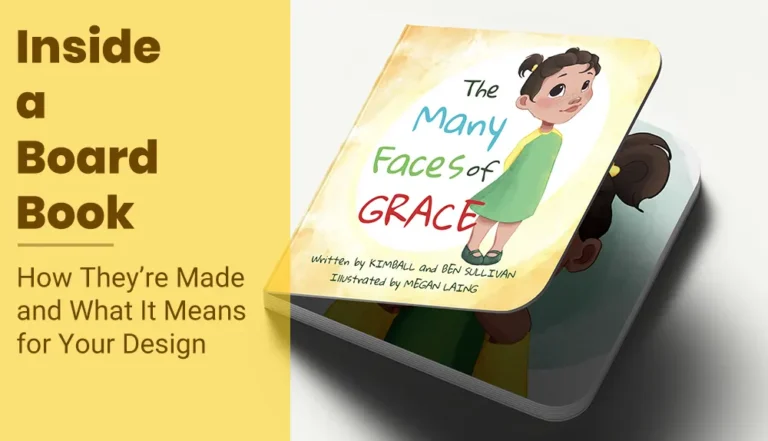
Standard Board Book
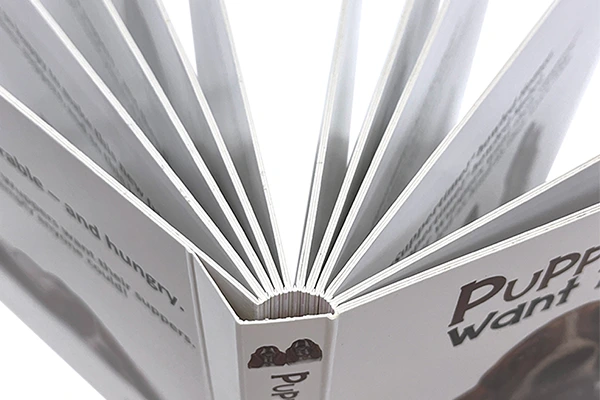
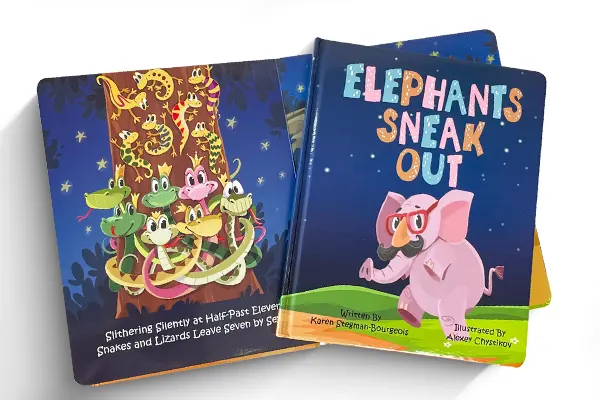
In a standard board book, every single element — front cover, back cover, and every page — is made from the same heavy paperboard stock (typically 300 gsm or higher). There is no gray board, no sewing, and no endpapers.
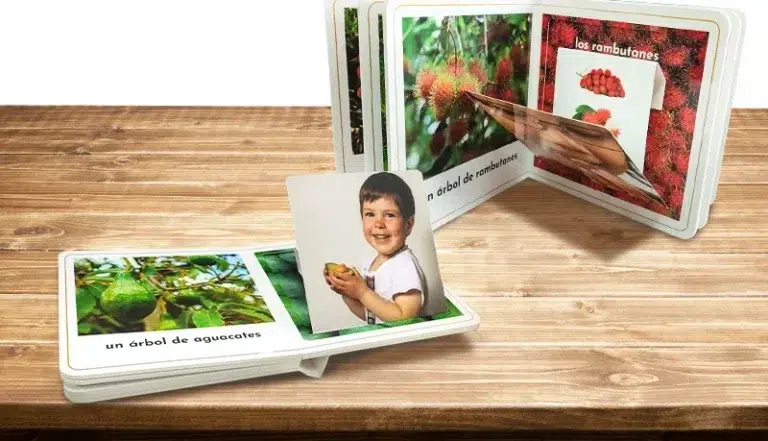
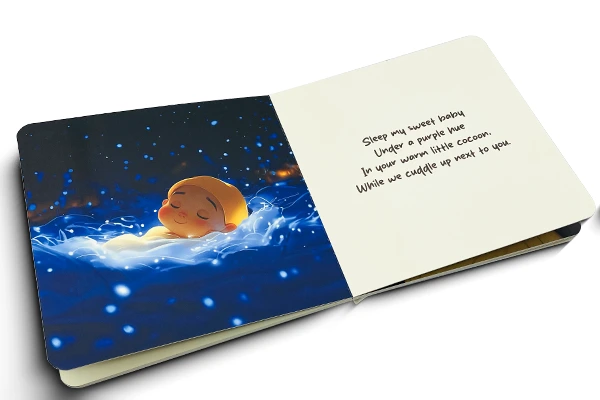
Each page is made by printing two sheets and gluing them back-to-back. Look at the edge of any board book page and you’ll see a thin seam in the center — that’s the join. The first page is glued to the inside of the front cover; the last to the back cover. Heavy-duty adhesive holds the whole structure together.
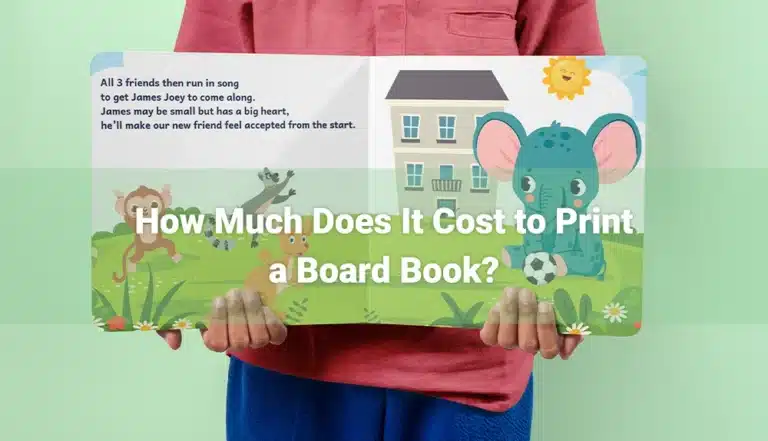
This construction gives standard board books their signature chunky feel and their ability to open completely flat at 180 degrees. The thick, laminated surface is also what makes them resistant to tearing, drooling, and the general destructive enthusiasm of a two-year-old.
Hardcover Board Book
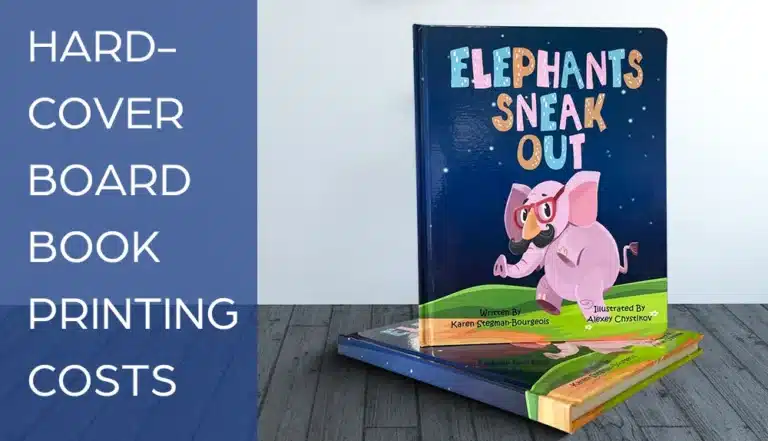
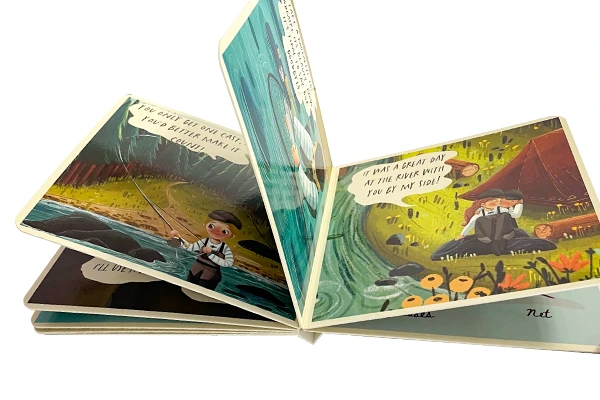
A hardcover board book is a hybrid. The inside pages are built exactly the same way as a standard board book — thick paperboard, double-layered, glued back-to-back, lay-flat at 180°. What changes is the outer case.
Instead of the cover being the same paperboard as the pages, a hardcover board book gets a proper hardcover case: gray board (stiff cardboard) wrapped in a printed paper, cloth, or leather outer material — exactly like a traditional hardcover book. Endpapers attach the case to the first and last board pages.
The result: a book that a toddler can handle (board pages), but that looks and feels like a premium hardcover on a shelf. This is why hardcover board books are popular for keepsake editions, panoramic children’s titles, and museum bookshop products.
Hardcover Book
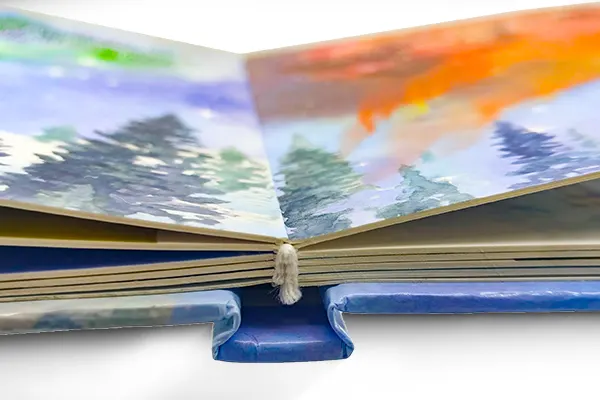
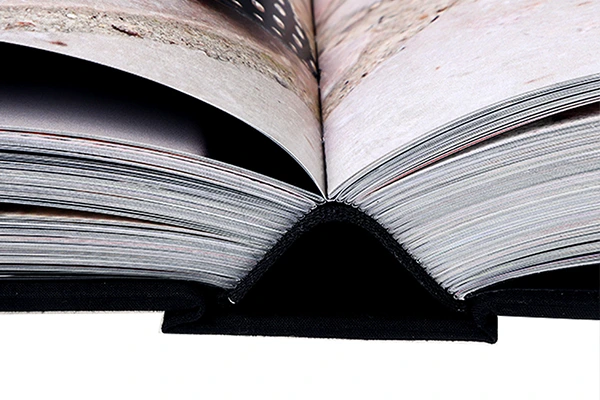
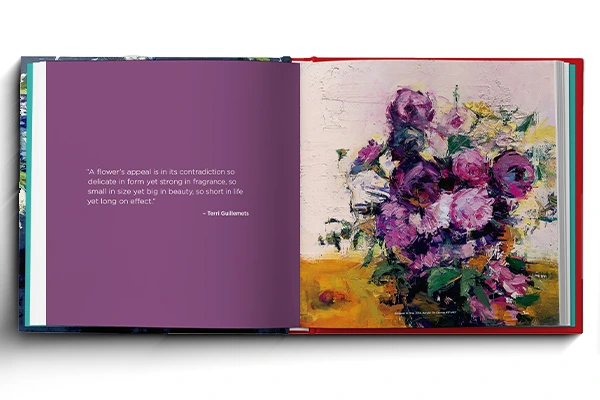
A hardcover book has three main components: the case (front cover, spine, and back cover made from gray board wrapped in a printed or specialty outer material), endpapers (which glue the case to the text block), and the text block (the actual pages, gathered into signatures that are sewn or glued before binding).
Unlike board books, the inside pages of a hardcover are standard book paper — the same paper you’d find in any novel, cookbook, or coffee table book. This means hardcovers can scale to almost any page count, from 24 pages up to 800 or more. When you open a hardcover, the pages curve gently toward the spine rather than lying completely flat.
The one-sentence version:
- Standard Board Book = thick board cover + thick board pages
- Hardcover Board Book = hard case cover + thick board pages
- Hardcover Book = hard case cover + standard paper pages
Materials
Standard Board Book materials
Cover and pages: heavy paperboard, 300–350 gsm. Every surface is the same substrate. Lamination (matte or gloss) is applied to the cover and is optional on inside pages — because the thick paper already provides a degree of moisture resistance.
Hardcover Board Book materials
Pages: same thick paperboard as the standard board book, typically 210–350 gsm — the exact weight varies by target age group, with heavier stock used for very young readers and lighter stock for older children.
Cover case: gray board (usually 1,500–2,500 gsm equivalent), wrapped in one of three outer materials — printed paper (most common), linen or buckram cloth, or faux/genuine leather.
Endpapers connect the gray-board case to the first and last page spreads.
Hardcover Book materials
Cover case: same gray board + outer wrap construction as the hardcover board book.
Inside pages: standard book paper, 80–157 gsm. Coated paper (gloss or matte) is used for image-heavy books like coffee table books; uncoated paper is typical for text-heavy novels or reference books.
Page Count
Page count limits are driven by the physical construction of each format, not by convention.
| Format | Minimum pages | Maximum pages | Why |
|---|---|---|---|
| Standard Board Book | 8 pages (incl. covers) | 64 pages recommended | Above 64 pages the accumulated thickness of double-layered pages makes the book difficult to open and hold flat |
| Hardcover Board Book | 8 pages (incl. covers) | 80 pages recommended | The hard case provides additional rigidity that supports a slightly higher page count than a standard board book, though beyond 80 pages the book becomes unwieldy |
| Hardcover Book | 24 pages | 800+ pages | Gray board spine needs minimum thickness to look balanced; upper limit is virtually unlimited with a rounded spine |
Finishing Options
The available finishing options differ significantly across all three formats. If a specific finish is important to your project — cloth cover, painted edges, foil stamping — verify availability before committing to a format.
| Finish / Option | Standard Board Book | Hardcover Board Book | Hardcover Book |
|---|---|---|---|
| Gloss or matte lamination (cover) | Yes | Yes | Yes |
| Soft-touch / velvet lamination (cover) | Yes | Yes | Yes |
| Spot UV coating (cover) | Yes | Yes | Yes |
| Foil stamping | Cover only | Cover + spine | Cover + spine |
| Embossing / debossing | Cover only | Cover + spine | Cover + spine |
| Rounded corners | All four corners | Yes | Cover board corners only |
| Die-cut custom shape | Yes (adds cost) | Yes (adds cost) | Cover only |
| Cloth cover wrap | No | Yes | Yes |
| Leather / faux leather cover | No | Yes | Yes |
| Dust jacket | No | Yes (rare) | Yes |
| Ribbon bookmark | No | Yes | Yes |
| Headband (decorative binding tape) | No | Yes | Yes |
| Painted / gilded page edges | No | No | Yes |
| Slipcase | No | Yes | Yes |
| Belly band | Yes | Yes | Yes |
| Gloss / matte coating on inside pages | No | No | Yes — coated or uncoated |
If you want cloth, leather, dust jacket, painted edges, or a ribbon — you need a Hardcover Book or a Hardcover Board Book.
If you need lay-flat opening AND a premium case — Hardcover Board Book is the only format that offers both.
If rounded corners and toddler-proof durability are your priority — Standard Board Book is the most cost-effective choice.
Real Pricing Across Sizes and Quantities (March 2026)
All prices below are real quotes from QinPrinting in USD. Prices are DDP (Delivered Duty Paid) to the Continental United States, including tariffs and shipping fees, excluding remote areas. Prices are per copy.
6" × 6" — Small Format
| Qty | Std Board Book 24pp | HC Board Book 24pp | Hardcover 24pp | Std Board Book 32pp | HC Board Book 32pp | Hardcover 32pp |
|---|---|---|---|---|---|---|
| 200 | $2.90 | $3.80 | $2.20 | $3.40 | $4.50 | $2.55 |
| 500 | $1.95 | $2.55 | $1.55 | $2.35 | $3.05 | $1.80 |
| 1,000 | $1.45 | $1.90 | $1.18 | $1.75 | $2.28 | $1.38 |
| 2,000 | $1.10 | $1.44 | $0.90 | $1.32 | $1.72 | $1.05 |
8" × 8" — Standard Format (most popular for children's picture books)
| Qty | Std Board Book 24pp | HC Board Book 24pp | Hardcover 24pp | Std Board Book 32pp | HC Board Book 32pp | Hardcover 32pp |
|---|---|---|---|---|---|---|
| 200 | $3.60 | $4.70 | $2.60 | $4.30 | $5.60 | $3.05 |
| 500 | $2.55 | $3.32 | $1.85 | $3.10 | $4.03 | $2.20 |
| 1,000 | $1.92 | $2.50 | $1.42 | $2.32 | $3.02 | $1.68 |
| 2,000 | $1.45 | $1.89 | $1.08 | $1.75 | $2.28 | $1.28 |
10" × 10" — Large Format (coffee table picture books, panoramic photo books)
| Qty | Std Board Book 32pp | HC Board Book 32pp | Hardcover 32pp | Std Board Book 48pp | HC Board Book 48pp | Hardcover 48pp |
|---|---|---|---|---|---|---|
| 200 | $5.80 | $7.55 | $4.20 | $8.40 | $10.90 | $5.10 |
| 500 | $4.19 | $5.45 | $3.08 | $6.09 | $7.92 | $3.26 |
| 1,000 | $3.15 | $4.10 | $2.35 | $4.55 | $5.92 | $2.50 |
| 2,000 | $2.40 | $3.12 | $1.80 | $3.45 | $4.49 | $1.90 |

Price notes:
- All prices include standard matte lamination on cover. Gloss lamination = same price.
- Soft-touch lamination, spot UV, foil stamping, embossing, cloth/leather covers, and rounded corners add cost — request a custom quote.
- Hardcover Board Book prices above assume printed paper wrap; cloth or leather covers add 15–25%.
- These are reference prices. Your exact quote depends on trim size, page count, paper weight, and finish. Use our free online quote tool at qinprinting.com/quote — no email required.
Minimum Order, Lead Times & File Requirements
| Standard Board Book | Hardcover Board Book | Hardcover Book | |
|---|---|---|---|
| MOQ (minimum order qty) | 100 copies | 100 copies | 100 copies |
| Production lead time | 15–18 business days after proof approval | 15–20 business days after proof approval | 10–15 business days after proof approval |
| Rush production | Available — ask for rush pricing | Available — ask for rush pricing | Available — ask for rush pricing |
| File format | Press-quality PDF, CMYK, 300 dpi, 3 mm bleed | Press-quality PDF, CMYK, 300 dpi, 3 mm bleed | Press-quality PDF, CMYK, 300 dpi, 3 mm bleed |
| Cover file | Flat single file: front + spine + back | Flat single file: front + spine + back | Flat single file: front + spine + back (spine width = f(page count × paper weight)) |
| Physical proof available? | Yes — printed sample via digital proofing | Yes — printed sample via digital proofing | Yes — printed sample via digital proofing, or hard proof + dummy |
| US shipping (sea / air) | Sea: approx. 6 weeks / Air: 7–10 days | Sea: approx. 6 weeks / Air: 7–10 days | Sea: approx. 6 weeks / Air: 7–10 days |
Download our free file preparation templates (board book and hardcover).
They include the correct bleed zones, safe zones, and a spine width calculator.
Which Format Should You Choose?
Here are the clearest decision triggers for each format:
Choose a Standard Board Book if…
- Your audience is children aged 0–4. Thick pages resist tearing, chewing, and bending — and the 180° lay-flat opening means small hands can hold the book easily.
- You want rounded corners. Standard for children’s titles and very cost-effective in this format.
- Budget is a priority. Standard board books are the most affordable board book option, especially at higher quantities.
- Your content is mainly large, full-spread illustrations. The lay-flat construction shows panoramic artwork without gutter shadow or page curl.
Choose a Hardcover Board Book if…
- You want lay-flat board pages AND the premium appearance of a hardcover case. This is the only format that offers both simultaneously.
- Your project is a keepsake, gift edition, or panoramic photo album where presentation matters as much as durability.
- You want a cloth or leather cover finish on a book with toddler-safe pages.
- You’re publishing a museum children’s bookshop title, a luxury picture book, or a premium re-release of an existing board book.
Choose a Hardcover Book if…
- Your audience is older children, students, or adults. Standard paper pages are fine — and far more cost-effective at any page count.
- You need more than 64 pages. Only hardcover books can scale to 200, 400, 800+ pages.
- You want the full range of premium finishes: painted edges, dust jacket, cloth or leather, ribbon bookmark, or a slipcase.
- Per-copy cost matters. At comparable specs, hardcover books are 20–55% cheaper per copy than either board book format.
Still not sure? The fastest way to decide:
“Will a toddler be handling this book?” → Yes: board book (standard or hardcover). → No: hardcover book.
“Do I need a premium case AND lay-flat opening?” → Yes: hardcover board book. → No: standard board book.
Frequently Asked Questions
Q: What is a standard board book?
A standard board book is a book where the cover and every inside page are made from the same thick paperboard (300 gsm or higher). Each page is constructed by gluing two printed sheets back-to-back, so every page is double-layered. This makes the book very sturdy — resistant to tearing, chewing, and rough handling. Standard board books open completely flat at 180 degrees. They are designed primarily for infants and toddlers aged 0–4.
Q: What is a hardcover board book — and how is it different from a standard board book?
A hardcover board book has the same thick paperboard inside pages as a standard board book (double-layered, lay-flat at 180°). The difference is the outer case: instead of a paperboard cover, a hardcover board book has a traditional hardcover case — gray board wrapped in printed paper, cloth, or leather. This gives it the premium look and feel of a hardcover while keeping the durable, toddler-safe board pages inside. Hardcover board books cost roughly 30–40% more than standard board books of the same size and page count.
Q: Is a board book the same as a hardcover book?
No — and the difference goes beyond the cover. A standard board book has thick paperboard pages throughout; a hardcover book has standard paper pages inside a hard case. The board book’s pages are much thicker and more durable, but the hardcover scales to far more pages and offers a wider range of finishing options. A hardcover board book sits between the two: hardcover case, board book pages.
Q: Which format is best for toddlers?
Standard board books or hardcover board books — both have the thick, tear-proof pages that toddlers need. Standard board books are the most cost-effective choice for most children’s titles. Hardcover board books are better when you also want a premium outer case (cloth cover, embossed spine, etc.). Regular hardcover books are not suitable for toddlers because the inside pages are standard paper and will tear.
Q: Can board books have rounded corners?
Yes — rounded corners are one of the most popular add-on options for both standard and hardcover board books, and are standard practice for children’s titles. They eliminate sharp corners and give the book a more polished look. We offer several corner radius options; mention it when requesting your quote.
Q: Are board books more expensive than hardcover books?
Per copy, at the same size and page count, yes. Standard board books typically cost 20–45% more than hardcover books; hardcover board books cost 30–55% more. The reason: each board book page uses double the paper stock (two sheets glued together) plus significant adhesive, and the heavy paperboard required (300 gsm+) costs more than standard book paper.
Q: What is the minimum order quantity (MOQ) for each format?
The minimum order quantity (MOQ) is 100 copies for all three formats — standard board book, hardcover board book, and hardcover book. If you need fewer than 100 copies, print-on-demand services are likely more cost-effective than offset printing.
Q: How long does production take for each format?
After proof approval: standard board books take 15–18 business days; hardcover board books take 15–20 business days; hardcover books take 10–15 business days. Add shipping time — sea freight to the USA takes approximately 6 weeks, air freight 7–10 days. Tell us your deadline upfront; rush production is available at an additional charge.
Q: Can I get a physical sample before committing to a full order?
Yes, and we strongly recommend it — especially for board books, where the weight, thickness, and tactile feel are difficult to judge from a digital proof alone. We can produce a printed dummy (a physical prototype) before full production. The cost of the dummy is credited toward your final order in most cases. Contact us to arrange.
Q: What finishing options are available for standard board books vs. hardcover board books?
Both formats share the same cover finish options: gloss or matte lamination, soft-touch lamination, spot UV, foil stamping, embossing, rounded corners, and die-cut shapes. The key differences: hardcover board books can also have cloth or leather covers, a dust jacket, a ribbon bookmark, and headbands — because they have a proper hardcover case. Painted page edges are only available on standard hardcover books (the pages must be standard paper for the gilding process to work).
Q: What file format do I need to submit?
All three formats require the same file specs: press-quality PDF, CMYK color mode (not RGB), 300 dpi minimum resolution, 3 mm bleed on all sides, all fonts embedded. For board books, keep key artwork and text at least 5 mm from the trim edge — the safe zone is slightly larger than for standard books due to the nature of the adhesive binding. Download our free templates at qinprinting.com/templates.
Summary
There are three formats to choose from, not two:
- Standard Board Book: thick board cover + thick board pages. Best for toddlers. Most affordable board book option. Lay-flat 180°.
- Hardcover Board Book: hard gray-board case + thick board pages. Best when you need lay-flat AND a premium outer case. Lay-flat 180°.
- Hardcover Book: hard gray-board case + standard paper pages. Best for older audiences, longer books, and the widest range of finishing options.
The right choice comes down to your reader, your content, and your budget. If you’re unsure, order a sample pack and feel the difference in your hands before committing to a print run.